City buses (ônibus) reach almost every Rio neighborhood and cost less than a ride-hailing car. They changed quite a bit in 2026: cash is no longer accepted on board and fares are charged at the validators of the Jaé system. This guide explains how to board, pay and find your way without surprises.
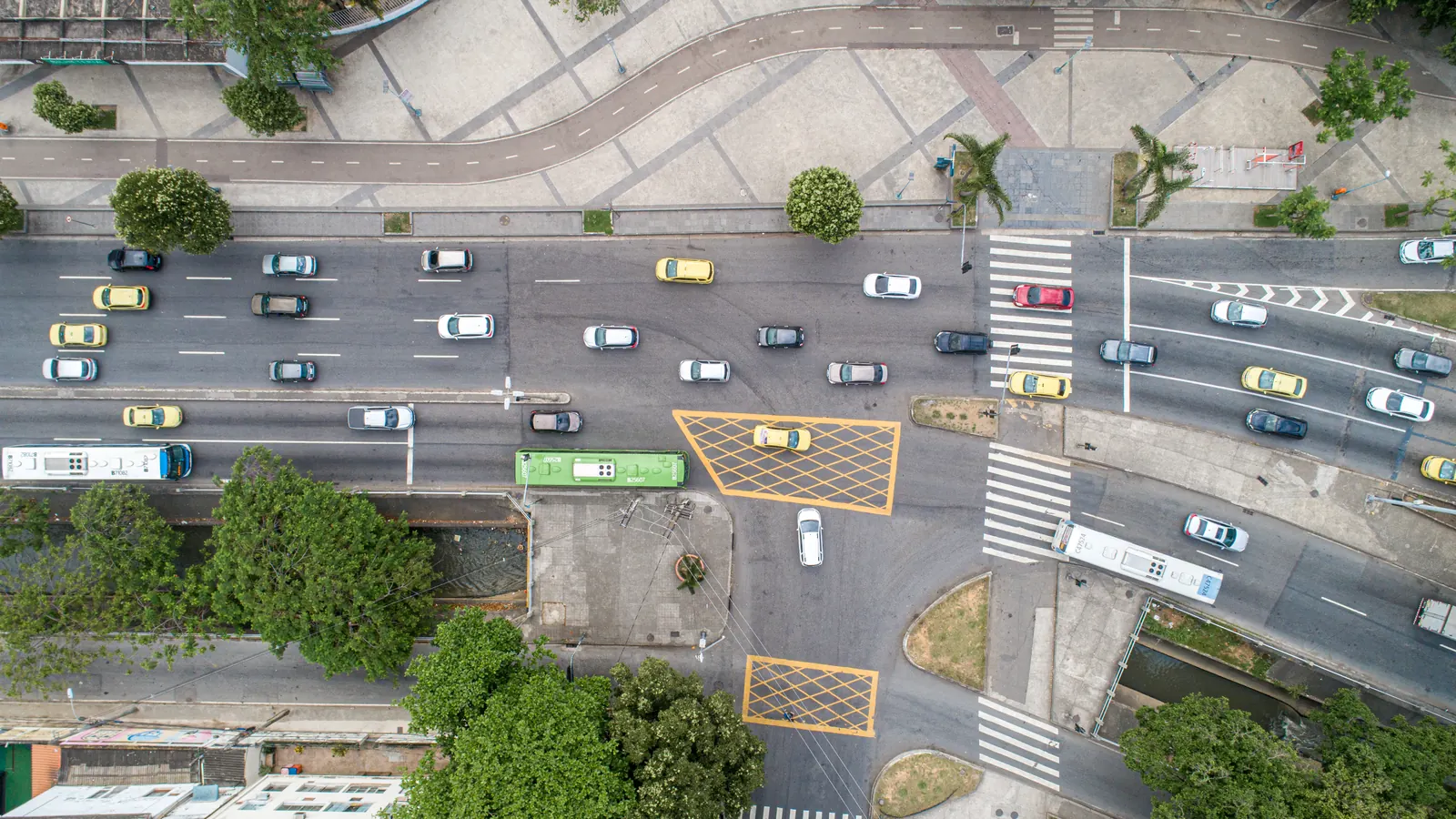
At a glance
- Fare: R$ 5.00 on city buses, BRT and VLT, according to the Prefeitura.
- How to pay: Jaé card, QR code from the Jaé app or, where it already works, a contactless debit or credit card. No cash on board.
- To board: wave your hand at the stop when you see your route coming.
- To plan: a maps app with public transit shows you which route to take and where to get off.
- At night or with luggage: a taxi or ride-hailing app is usually more comfortable.
The fare and how to pay it
The Rio Prefeitura ↗ sets a fare of R$ 5.00 for city buses and stopped accepting cash on board in 2026. Today you pay in one of these ways:
- Jaé app: generate a QR code and hold it to the validator.
- Jaé card: the green single-use card is sold at newsstands and machines; the black card, registered with a CPF, gives access to transfers.
- Contactless bank card: the Prefeitura regulated debit and credit payments directly at the validator, but the rollout happened in stages. Have a backup in case your card doesn't go through.
Cash still works for buying or topping up a Jaé card at machines, BRT ticket booths and authorized shops. Full details in Jaé and Riocard: how to pay for transit.
Getting on and off
- Find the stop (ponto de ônibus) and check the number and destination on the sign at the front of the bus.
- Wave your hand as yours approaches. If you don't signal, it may drive past.
- Board and tap at the turnstile with the app, the card or your bank card.
- Request your stop with the bell shortly before you reach your destination.
Don't rely on the number alone: the same route can have variants with different paths. Read the destination on the sign and, if in doubt, ask the driver before tapping.
Planning your route
Maps apps with public transit show you the route, the stop and the estimated time. Use them as a reference and check the bus sign when you board. For long trips between the Zona Sul and Barra da Tijuca, compare with the metro and the BRT, which runs on dedicated lanes. The metro network is in how to use the metro.
MetrôRio's connector buses link some stations with neighborhoods without metro. According to MetrôRio ↗, the metro + connector bus combination has a special fare with Jaé or Riocard. Check there which routes are included.
Sensible precautions
- Keep your phone put away when you're not using it, especially near the doors.
- Carry your backpack in front if the bus is crowded.
- At night, choose a taxi or an app if the trip is long or the area is empty.
- With large suitcases, the bus isn't the best option: see the airport transfers in Galeão to Copacabana and Ipanema.
More general advice in safety in Rio.
Frequently asked questions
Can I pay in cash if I don't have a card?
Not on board. Buy a single-use Jaé card at a newsstand or machine beforehand, or use the app.
Is there a multi-ride ticket?
With a registered Jaé card or the app, the Bilhete Único Carioca lets you combine rides for a single fare within a set time window. With a bank card, each ride is charged separately.
Bus, metro or app?
It depends on the trip. In getting around Rio we help you organize each day.
Sources: Rio Prefeitura: Pix and card payments on buses ↗, Diário do Transporte: SMTR Resolution 3,952 ↗, Jaé ↗ and MetrôRio: payment methods and fares ↗, accessed October 27, 2026.